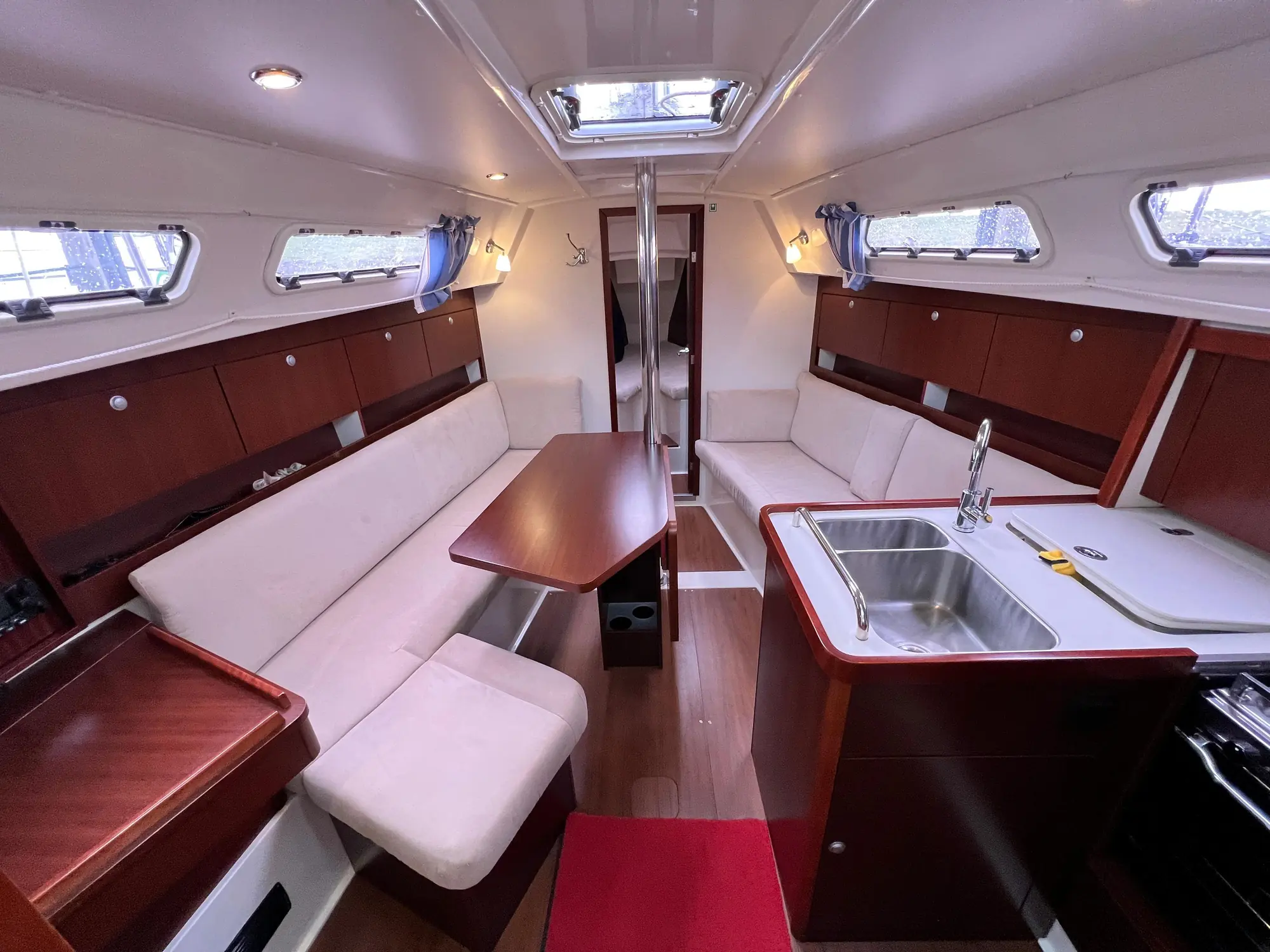
What Does a Yacht Charter in Greece Actually Cost?
A published €2,800 weekly rental becomes €3,320 with compulsory charges. We explain how to separate fixed costs, trip expenses and refundable security when budgeting for Greece.

A yacht advertised at €2,800 for a week can cost €3,320 before you buy groceries or leave the harbour. In Istion’s published Greece schedule, a sailing monohull for 3–10 October 2026 carries a compulsory €170 charter pack and a €350 non-refundable damage waiver. Those two charges add €520 to the rental.
The weekly rate tells you what the yacht costs to rent. It does not necessarily tell you what your crew will spend—or how much money you must have available. We recommend keeping three figures separate: fixed charges, expenses that depend on your trip, and refundable security money. Each answers a different budgeting question.
This guide uses published operator prices checked on 1 October 2026, not estimated market averages. All figures are in euros. The summer 2026 examples are historical comparisons; the October example is a published rate, not confirmed availability. A separately dated 2027 offer illustrates how a discount can be clear while the complete cost remains unresolved.
Start with the rental—and add the compulsory charges
With a bareboat charter, you rent the yacht without hired crew. The examples below use Istion’s 2026 schedule for ordinary private bareboat bookings eligible for its damage-waiver arrangement. Flotillas and regattas have different conditions.
| Published example and week | Rental | Mandatory charter pack | Mandatory non-refundable waiver | Fixed subtotal |
|---|---|---|---|---|
| Sailing monohull, built 2013; 3–10 October 2026 | €2,800 | €170 | €350 | €3,320 |
| Catamaran, built 2017–2019; 1–8 August 2026 | €9,600 | €290 | €500 | €10,390 |
Istion’s price list includes VAT in the rental, with its stated discounted tax treatment subject to conditions. Final cleaning and standard linen are included, but the compulsory charter pack remains payable separately. Fuel, water consumption, additional berthing and provisions are excluded.
The useful starting comparison is therefore €3,320 versus €10,390—not €2,800 versus €9,600. Neither subtotal includes the whole holiday. Nor does the difference measure the price of choosing a catamaran over a monohull: these boats differ in size, age and season. The table shows how compulsory charges change two published rentals, not a like-for-like comparison between boat types.
Read the pack, not just its name
There is no single Greek charter-pack charge. One operator bundles items together; another bills cleaning, linen and departure supplies separately. To compare quotes, you need to know both the total and what it covers.
Ionian Yacht Charter’s 2026 terms list obligatory cleaning at €200 for monohulls with up to three cabins and €350 for catamarans up to 42 feet. Linen and towels cost €15 per person, and one tank of outboard fuel costs €10. For eight people on a catamaran in that cleaning bracket, those listed extras total €480: €350 cleaning, €120 linen and €10 outboard fuel.
The outboard itself is included in that operator’s offer. Its fuel charge is a useful reminder that “dinghy and outboard included” does not settle every associated cost. Aegean Blue Sailing takes a different approach: standard linen, towels and a dinghy with outboard are included, while its 2026 schedule lists mandatory end cleaning separately, including a €150 charge for one of its monohulls.
Ask what is inside each pack before adding separate cleaning or linen charges. Otherwise, you can overlook a compulsory payment—or count the same service twice. “Starter pack,” “charter pack” and “end cleaning” are not interchangeable descriptions.
Separate spending from refundable security
A refundable deposit affects the funds you need available, but it is not expected spending if it is returned under the contract. A non-refundable damage waiver is spending. Some arrangements require both.
Aegean Blue Sailing lists a €2,000 security deposit for the monohull used in its €150 cleaning example. Its alternative waiver schedule for 37–49-foot monohulls is €30 per day plus €500 refundable security, arranged in advance and subject to acceptance. For seven days, that means €210 spent on the waiver and €500 still committed as security—not €710 of expected expenditure.
Istion’s ordinary eligible Greece bookings instead use a compulsory non-refundable waiver in place of the yacht’s security deposit. Its terms retain exceptions and liability exclusions. A waiver is not unlimited protection against every possible loss; ask which damage, equipment and circumstances remain outside it.
Keep refundable security on its own budget line, with the payment method and release conditions beside it. You can then distinguish what you expect to spend from the money that must be available during the booking.
A skipper needs a fee, meals and somewhere to sleep
Istion’s published 2026 freelance skipper rate is €215 per day, excluding provisioning. Seven billable days cost €1,505. You must also provide crew provisions; where meal compensation is agreed, the terms specify at least €30 per crew member per day. For one skipper over seven days, that minimum compensation adds €210.
Aegean Blue Sailing publishes €190 per day plus provisioning, or €1,330 for seven billable days. Its terms require crew to have their own cabin. Istion requires an onboard sleeping berth and bathroom access. These arrangements matter before you divide the cost among friends: space assigned to the skipper cannot also be promised to a guest.
Confirm the number of billable days and the sleeping arrangement, then request a revised itemized quote. Simply adding €1,505 to the bareboat subtotals above would not establish an accurate skippered price: Istion lists a distinct waiver category for skippered charters.
Build running costs around the holiday you want
The consulted bareboat operators exclude fuel consumption, provisions and port fees beyond their included embarkation and disembarkation arrangements. Some also exclude water consumption. A precise weekly allowance needs the boat and itinerary behind it.
If your crew prefers short passages and meals cooked aboard, ask for an estimate built around that plan. If you want longer transfers, marina nights and restaurant dinners, budget for those choices instead. The point is not to prescribe the cheaper holiday, but to make sure the estimate describes yours.
Ask the operator to consider your route, expected engine use, generator or air-conditioning use where applicable, planned harbours and guest numbers. Keep onboard provisioning, restaurant spending and crew meals distinct. An allowance tied to those details helps you make decisions; it remains an estimate, not a guaranteed final bill.
Fully crewed yachts: an allowance is not a fixed surcharge
A fully crewed charter uses a different pricing structure. One motor-yacht entry in Istion’s 2026 crewed price list is €19,900 per week in July and August, and €17,500 in June and September. Crew wages are included, but the published “plus expenses” terms put guest provisions, fuel, berthing, VAT and other specified expenses outside the rental.
Running expenses are commonly funded through an Advance Provisioning Allowance, or APA: money advanced for the captain to spend on the charter’s expenses. Istion’s FAQ describes a typical allowance of 25–40% of the charter fee. The captain accounts for expenditure; unused funds are refunded, while spending above the allowance requires an additional payment.
For illustration, an agreed 30% APA on a €19,900 charter would be €5,970. Rental plus that allowance would require €25,870 before VAT and any other separately contracted charges. The 30% is an arithmetic example, not a confirmed allowance for the yacht in the price list, and €25,870 is not a verified all-in price.
Do not add fuel and provisions a second time if the APA already funds them. Equally, do not treat the entire allowance as certain final expenditure. It is an advance to be reconciled against actual expenses.
Confirm VAT for the specific contract. The consulted operator documents describe conditional tax treatment and do not support applying one rate to every Greek charter. Crew tips are discretionary, not mandatory extras.
A 2027 discount with an incomplete total
As checked on 1 October 2026, Greek Seas Charter’s rates page advertises a catamaran for 1–8 May 2027 at a regular weekly rate of €7,000, reduced to €6,300 by a displayed 10% early-booking offer. Cleaning, standard linen and the dinghy with outboard are included.
A skipper is mandatory and costs extra. Fuel, mooring and provisioning are additional too. The consulted page does not specify the skipper fee or clarify VAT treatment, so €6,300 is not a verified all-in total. The advertised saving is €700; the amount your crew must budget still requires an itemized quote.
The quote your crew can make a decision on
When you compare boats in our charter search, keep the exact dates and crew requirements alongside the rental price. Before paying, ask for these six parts separately rather than a single unexplained “extras” figure.
- Yacht rental: exact boat, dates, discount and whether VAT is included.
- Mandatory non-refundable charges: packs, cleaning, linen and damage waivers, with their contents stated.
- Crew: billable days, provisions or meal compensation, and sleeping arrangements.
- Variable spending: an itinerary-based allowance for fuel, water, berthing and provisions.
- Refundable security: amount, payment method, deductions and release conditions.
- Optional extras: requested equipment, transfers and special arrangements.
The €2,800 week becomes a useful starting point once its compulsory €520 is visible and the remaining costs have their own place. You do not need every grocery receipt in advance. You do need to know which payments are fixed, which depend on your choices and which money should come back. That distinction turns an attractive rental into a budget your crew can agree on.