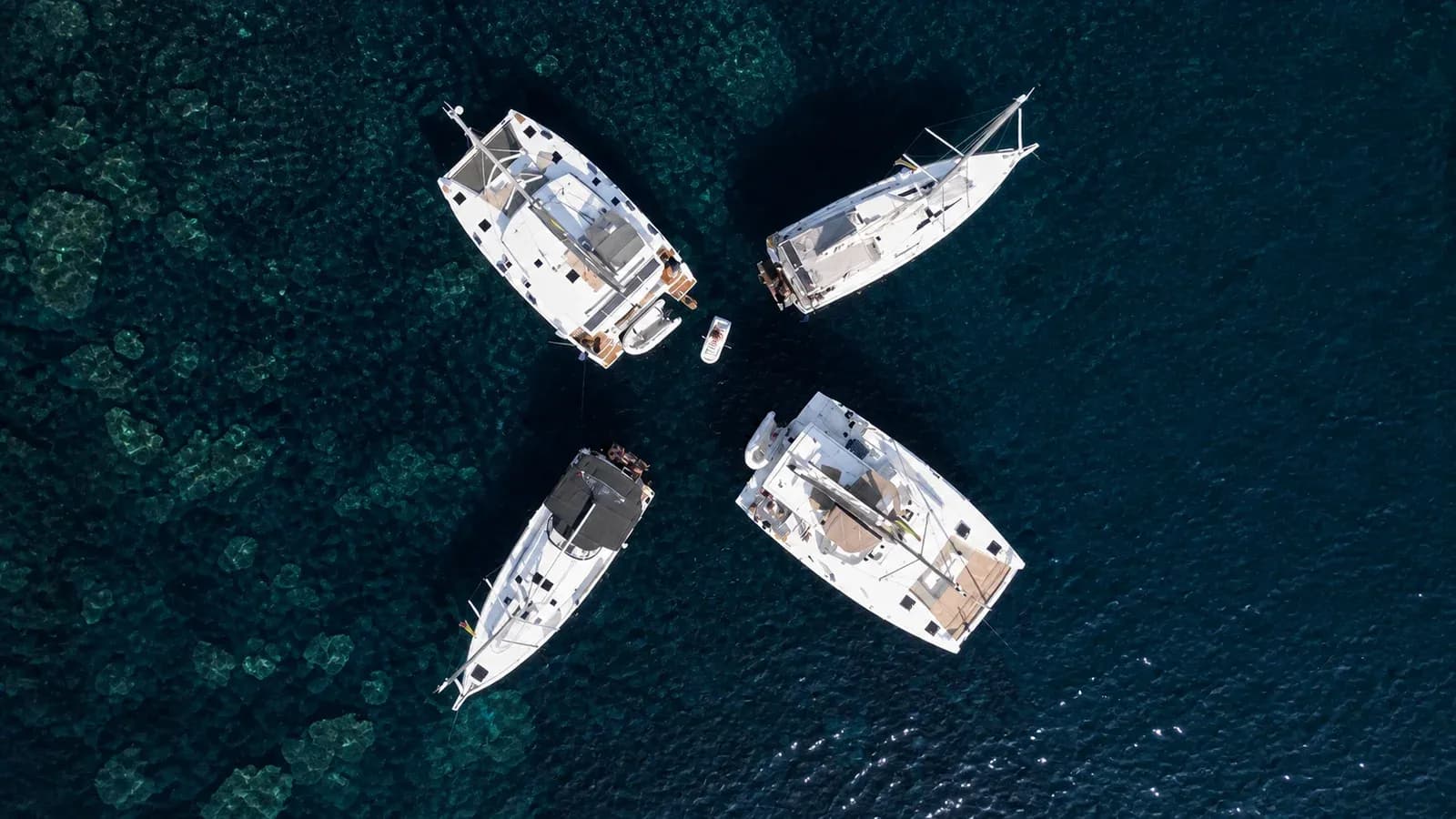
Catamaran vs monohull: when extra width earns its keep
More than 2.5 m separates the widths of two comparable cruising designs. We explore when that wider platform helps your crew—and what it asks of your budget, route and handling skills.
The Lagoon 40 measures 6.76 m across; the Beneteau Oceanis 40.1 measures 4.18 m. These cruising designs sit in a similar nominal size class, yet their widths differ by more than 2.5 m. Before you count cabins, consider what that extra width means: a wider platform for life aboard, and a wider berth to find at the end of the day.
Here, we compare a cruising catamaran with a monohull sailing yacht. Both are sailing yachts; one has two hulls, the other one. The useful question is not which type wins, but which boat’s advantages your crew will use—and which demands your route, budget and experience can accommodate.
If your crew puts shared living space and less heel first, a cruising catamaran deserves close attention. If you enjoy monohull sailing and prefer a narrower boat, start there. We would still make the choice through actual layouts, complete quotations and boat-specific handling requirements, rather than letting the hull count decide the trip.
Space: what will your crew actually use?
The Lagoon 40 is offered with three or four cabins; the Oceanis 40.1 has two-, three- and four-cabin arrangements. A catamaran therefore does not automatically give you more bedrooms. Its greater beam—the boat’s width—provides a wider platform, but beam alone cannot tell you how much usable interior space you gain.
Consider two possible crews. If four couples each want a separate cabin, both four-cabin arrangements merit inspection, including the beds, bathrooms and any accommodation needed for a skipper. If a smaller group values sitting together more than spare beds, cabin count becomes a poor sorting tool. The better layout is the one that supports how you intend to spend your time.
Look at the cockpit, the saloon—the indoor living and dining area—and the routes between cabins, bathrooms and deck. Where would everyone sit together? Where would bags go? Would someone moving through the boat disturb a sleeping cabin? A floor plan can answer questions that a photograph of cushions cannot.
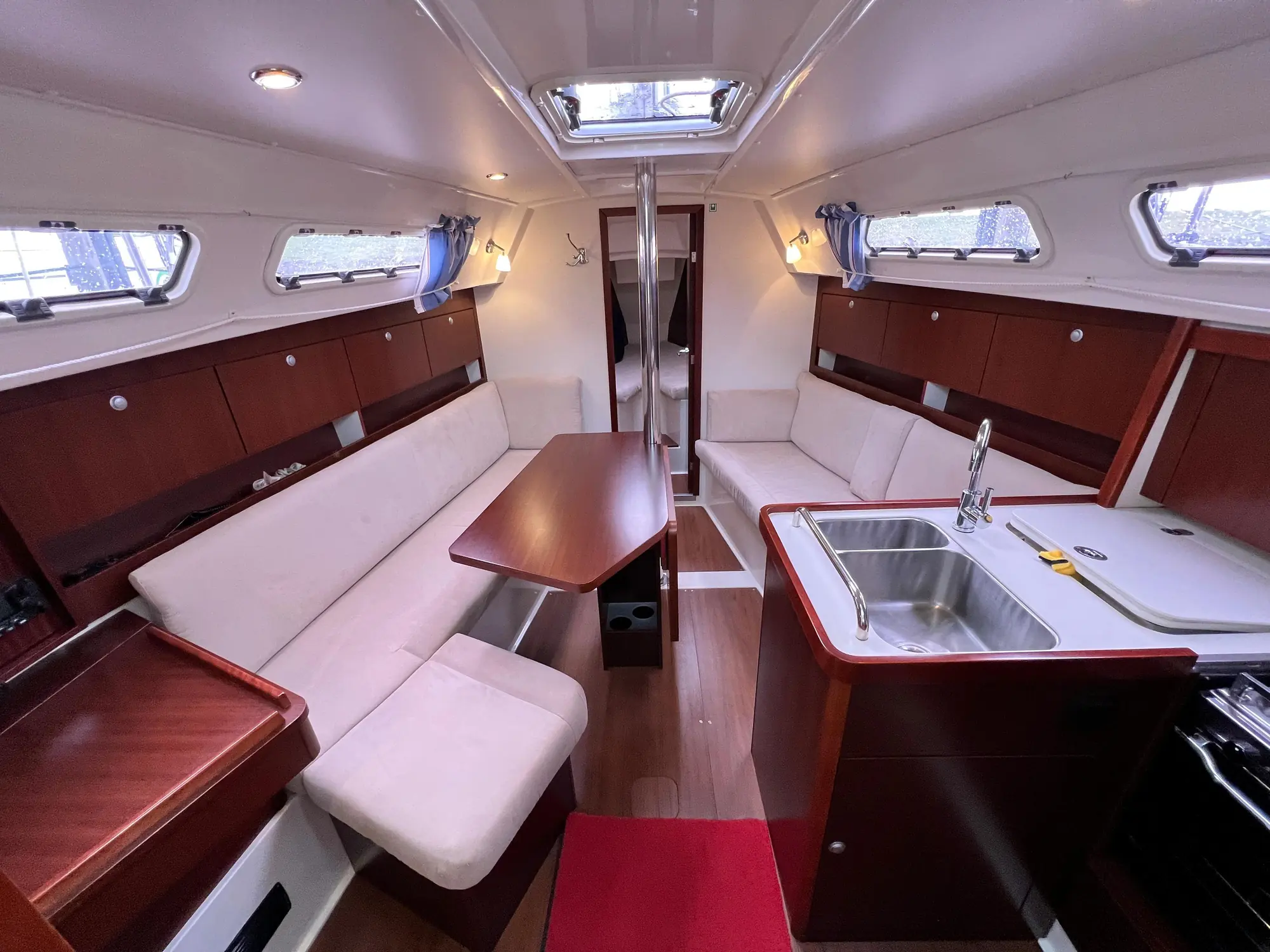
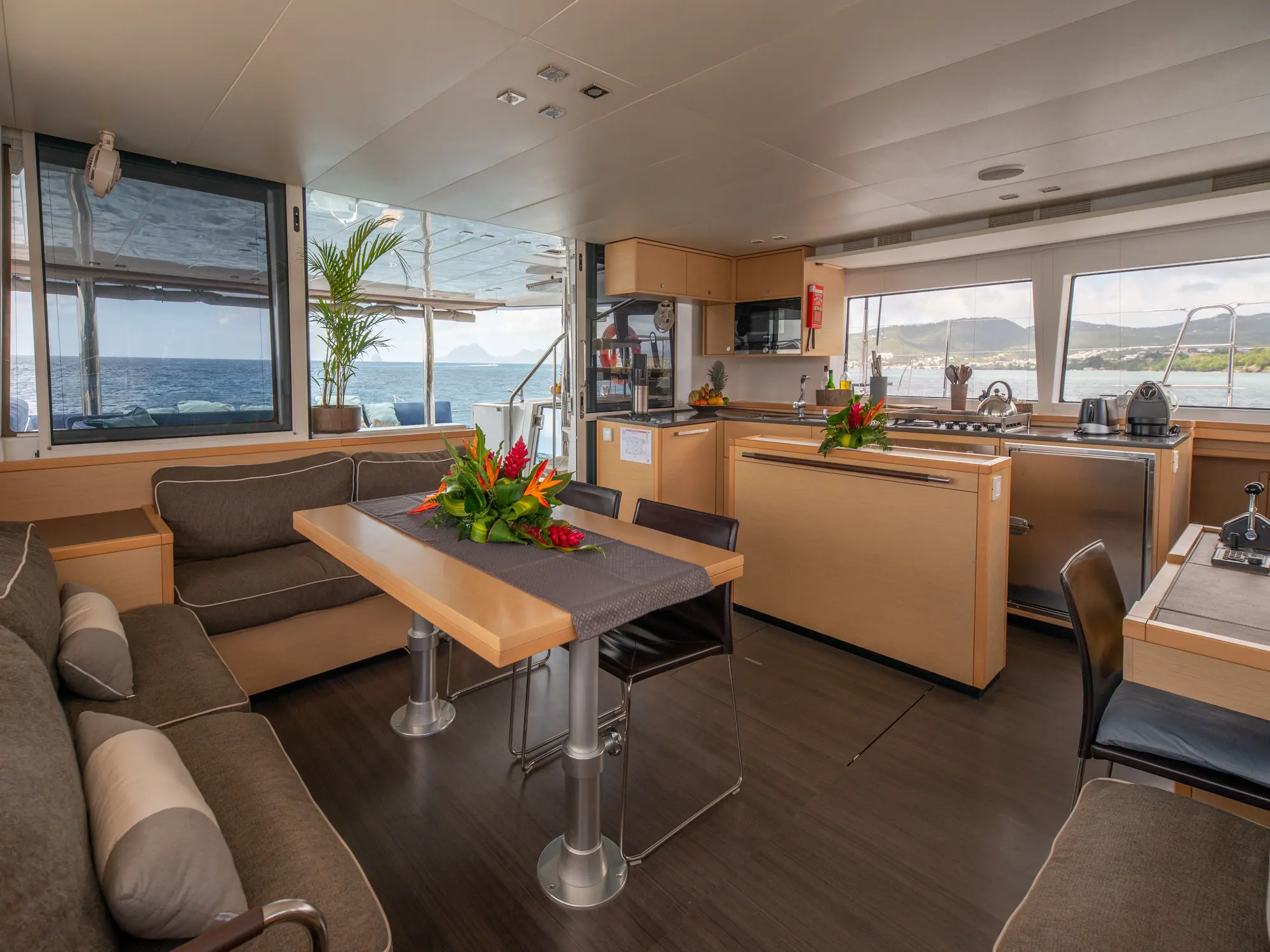
The manufacturers’ specifications make the differences between these two models concrete. They are examples, not averages for all catamarans and monohulls. Cabin arrangements and draft must still be checked for the particular version you are considering.
| Specification | Lagoon 40 | Oceanis 40.1 |
|---|---|---|
| Beam | 6.76 m | 4.18 m |
| Draft | 1.35 m | 1.68–2.27 m |
| Cabin options | 3 or 4 | 2, 3 or 4 |
Draft is the vertical distance from the waterline to the boat’s deepest point. In this comparison, the Lagoon draws less water than the published Oceanis configurations. That is useful when assessing a shallow cruising area, but it is not permission to enter any inviting patch of water. Check the actual boat’s draft and the available depth, allowing suitable clearance beneath the boat.
Cost: follow the width into the quotation
A charter-price comparison only helps if you hold the important variables steady: destination, dates, duration, boat age, equipment and inclusions. Otherwise, a difference attributed to hull type may reflect the season or what one quotation leaves out. The evidence here does not support a universal catamaran price premium.
Berthing provides a specific example of where width can cost more. Marina Miraggio’s published 2026 tariff charges over-width vessels, including catamarans, 1.5 times the normal price—a 50% surcharge at that marina. That is not a rule for every harbour. Ask your intended stops both what the berth costs and whether they can accommodate the boat’s beam.
Charter extras need separate attention too. The Moorings publishes damage-waiver fees and security-deposit categories that distinguish between catamarans and monohulls, as well as boat sizes. A waiver charge and a security deposit are different considerations; neither should disappear into a vague label such as ‘extras’. Read the applicable terms alongside the rental quote.
When you browse our bareboat catalogue, use layouts and specifications to build your shortlist, then compare quotations on the same basis. Before deciding which option offers better value, establish these costs and terms:
- The rental fee and exactly what it includes.
- Compulsory charges, damage-waiver terms and the security deposit.
- Requested services and optional equipment.
- Likely berthing costs and suitable-berth availability along the route.
- Expenses the crew will pay during the trip.
For buyers, the comparison extends to purchase price, insurance, haul-out, storage and equipment servicing. The Lagoon 40’s published standard engine specification is two 45 hp engines. That means two engines to account for in the servicing budget, not evidence that the boat’s total maintenance bill will be twice a monohull’s. Obtain quotations for the actual boats rather than applying one multiplier to every expense.
Under sail: less heel, different signals
Heel is a sailing boat’s sideways lean under wind pressure. Moving from a monohull to a catamaran can mean much less of it, which may appeal to a crew that dislikes living at an angle. But a relatively level deck does not prove that the boat is carrying the right amount of sail.
Expert coaching guidance for performance catamarans stresses wind information and boat-specific reefing decisions rather than familiar monohull warning signs. Reefing means reducing sail area as conditions require. For a cruising charter, the practical lesson is to learn the particular boat’s limits and reefing procedure during handover, rather than waiting for it to feel overpowered.
Keep the distinction between designs in mind: performance-catamaran advice does not apply unchanged to every family cruising catamaran. Nor does either hull type carry a universal speed advantage. Sailing angle, design and the crew’s choices can change the result. The route that promises the fastest passage may not be the one your crew finds most comfortable.
If some of your crew enjoy the feel of a monohull under sail, that is a valid preference. If others place more value on less heel, that matters too. Discuss it before choosing the boat, while the conversation still concerns a floor plan rather than someone’s lunch.
In the marina: control is boat-specific
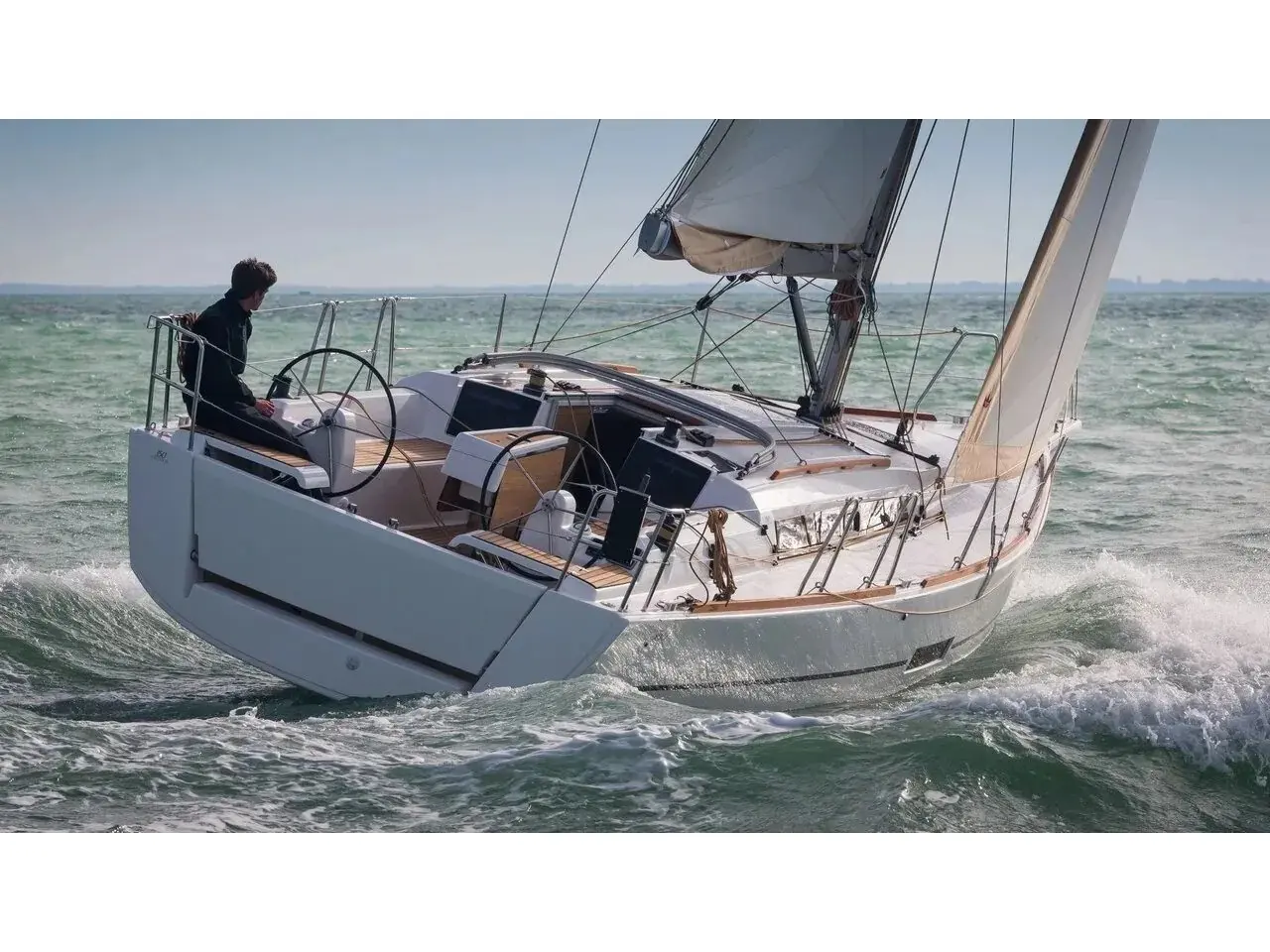
Catamaran training treats twin-engine manoeuvrability, engine placement and windage as specific subjects to learn. Windage concerns the effect of wind on the boat’s exposed surfaces. Two engines offer useful options for low-speed control, but they do not make every approach automatically easy. You still need to understand the boat’s response and the room your manoeuvre requires.
The same need for familiarity applies to a monohull. Knowing one boat does not establish how another will behave in reverse or in a crosswind. American Sailing’s docking guidance recommends open-water drills to learn the individual boat’s low-speed behaviour before relying on it near a berth.
Build that practice into your preparation. In clear water, learn how the boat starts, stops and turns, then agree who will handle lines and how you will communicate. Before entering a marina, confirm the berth dimensions and plan your approach. The broad platform your crew appreciates at anchor still has to fit where you intend to tie up.
Choose the space you need—and the demands you can meet
If your plans centre on shared meals, time aboard and less heel, look closely at a cruising catamaran’s layout, total cost and berth requirements. If you prefer monohull sailing and a narrower footprint, examine the monohull layouts with the same care. A boat that accommodates your crew well should not be dismissed simply because another is wider.
For either type, be honest about your experience. If its handling is unfamiliar, arrange appropriate preparation rather than treating the booking as the lesson. Our bareboat guides can help you work through the practical questions as you narrow your choice.
The extra width in our opening comparison is neither a prize nor a problem by itself. It earns its keep when your crew uses the space and your itinerary allows for its demands. Choose the boat whose advantages matter on your trip—not the one that wins a comparison detached from it.